The Moon Valley
(Valle de la Luna), is located in the small village of Mallasa about 10
kilometres southwest of La Paz, is a very unique landscape filled with rock
formations that have been formed through thousands of years of erosion.
Visiting La Paz, Bolivia for a few days, then i went to the Moon
valley near from la paz. The moon valley is around 20 minutes from la paz. I
taked the mini bus in the center of la paz and i went with a mini van for 4
bolivians. the trip is fast at the end in Mallasa.
so i must to pay for 25 bolivians. the
moon valley is one the best option to visit when you are here in la paz. Its a
wonderful place and landscape to explore. you can see here a lot like canion
and rare forms of stones made from vulvans ashes and sand, many cactus like san
pedro and animals, like vizcacha, rabbits and fox. so was an amazing
experience.
In the Moon Valley ( Valle de la Luna ) you can see here a
lot, like canion and rare forms of stones made from vulvans ashes and sand, many
cactus like san pedro and animals, like vizcacha, rabbits and fox. so was an
amazing experience This natural
phenomena made from the variance in mineral and the compotion of sand, so give
this impressive optical on the hillsides.
Indide the valley the are many walking ways to see all the moon valley
and don´t loss any part. So many view Points like. The Devil´s Point is the
most espectacular point located over in the toward of the longest track . The
other walking way is more shorter like 15 minutes and the longest 50 minutes.
Welcome guys to another Travel blog through Southamerica,
bevor i went to Copacaban, i Have visited the other side from the Titicaca lake
in uros island Peru. I spent there a full week in puno.
Then have taked a bus to across the front between peru
and Bolivia, that was easy and faster. the trip was for 2 hours to arrive
Copacabana.
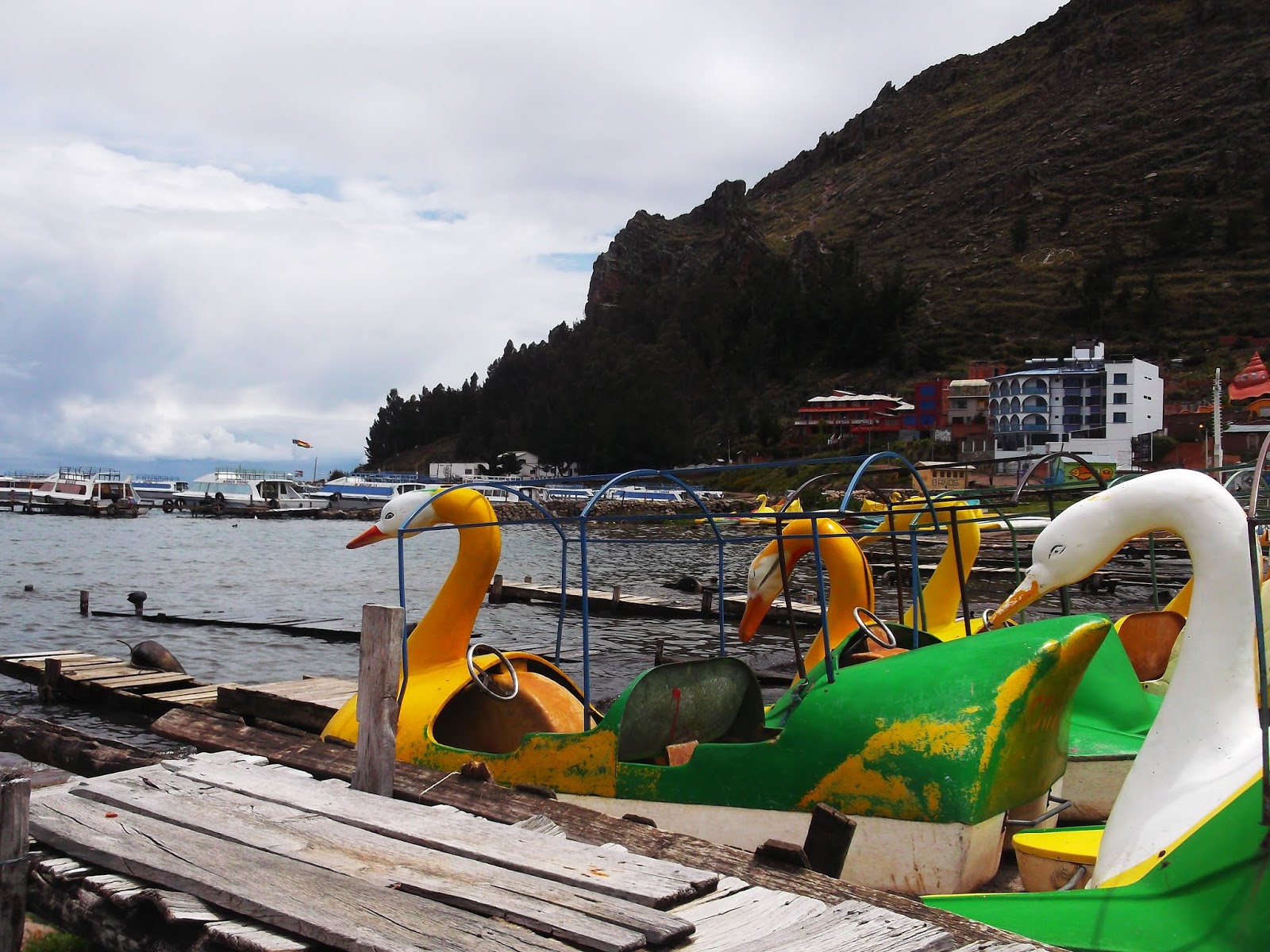
Copacabana is a wonderful city located on the amazing
natural wonder Titicaca lake, so fantastic place ¡! To get relaxing and get
walking around. So stiller and beautiful place. I spent a few day in copabana
to discover more from this city of Bolivia.
First i went to eat some traditional food there, i ate some
fish (trucha) with salat, was so delicious tasting this dishes so typical from
this place. The city Copacabana Bolivia including visiting markets, walking
along the boardwalk and eating rainbow trout (Trucha).
What to do in Copacabana
The first thing that struck us about Isla del Sol were
the landscapes. We had to climb some pretty steep inclines to reach the top of
the island but once we did we got some incredible views of our surroundings. We
also enjoyed making friends with lots of animals along the way including sleepy
pigs basking in the sunshine and a mix of horses and donkeys.
While we enjoyed our day trip to Isla del Sol we did feel
our visit was a bit rushed. We managed to walk the length of the island but we
only made it back on the boat with 10 minutes to spare. Crossing the island
takes a lot longer than tour operators let on so if you really want to visit
and you don't mind a remote setting you may want to consider spending a night
or two on Isla del Sol.
Othe choice is you could choose an ordinary restaurant to
have trout but where are we instead? Yeah, we're along the boardwalk and there
are many restaurants literally lined along here. There actually not even
restaurants. They are more like little stands. Yeah, exactly. Just like what
you're seeing here. Tarp walls. And honestly we don't know where to go we just
walked by a whole bunch of them and decided okay let's pick the last one why
don't we go there. Lets do!
Other option when you are there and you must next day
travel, so you can there get relaxing and take time to rest the body and charge
energy for the next trip. Copacabana city is very stiller place and with a
beautiful view of the Titicaca lake. So get relaxing and enjoy !!
Where i can stay
In Copacabana are many Hotels to stay alog time there. Some
are cheaper and most more expensives. Bevor i came to copacana i reserved my
chepaer hotel by booking.com near from the lake and was not to expensive fast
40 bolivianos ( 8 dolars ) i walked everey day from my hotel to the lake and
have a balkon with good view but not to well to anothers biggers hotels and
more expensives.
So there is anothe typical hotel a pretty cool place
called Las Olas where they have like these weird cottages some of them look
like tree houses, some of them are like little spirals and they have domes and
I don't know. It just looks like this fantasy land so we're going to take you
up and show you our cottage.
I really recommend this hotel to stay and get relaxing
more. cheers !
Check
out the Travel video
The center of Copacabana
The magnificence of the legendary Lake Titicaca and
religious devotion attract thousands of pilgrims and tourists to this sanctuary.
Built by Francisco de Siguenza, the most interesting monument is the atrium,
surrounded by a low wall crowned with battlements and with four chapels in the
corners; the interior of the sanctuary preserves the great altarpiece of the
main altar, and the primitive Mannerist altarpiece, the work of Sebastián
Acosta Inca.
All photos and video taken by me Cesar Lima( cesar
Traveler ), then we went next day to La Paz, i was very exiting to discover
this city and meet people so i reserved my hote by bookinghere. La paz has
many places to offern like, the moon valley, the center, churcheas and more. So
thanks to see my blog ¡! Wait for the next.
Here in La paz Bolivia, visited the Moon valley near from
la Paz. A misterious place, i recomen to visit.
Iquitos is located in the northern jungle, to the east. It is the capital of the Loreto Region, with nearly 30% of the country is the largest and most northern of Peru. The city lies on the banks of a secondary arm of the Amazon River, opposite a large white permanent called Padre Island, wooded and almost twenty kilometers. The city is surrounded by a number of smaller rivers and canals.
Near the confluence of the great Napo River is the Amazon. In this river world, the communications depend as much or more than the navigation of land transport, virtually nonexistent outside the city of Iquitos. In Iquitos there is a zoo recently opened and some buildings of interest, due to the rubber boom of the last century, as the old houses of mosaics front of the boardwalk, and the first manufactured home of America: the Iron House, designed and built by Gustave Eiffel, brought from Europe by parties (including nuts and bolts) and assembled in the place where it is located in the city center.
ways for comming to Iquitos The traditional way to reach Iquitos is by air. Alternatively sailing down the Amazon River and its major tributaries such as the Ucayali River and the Maranon River. The city of Iquitos has no roads linking it to other major cities of Peru; There is only one road of 115 Km. from Iquitos to Nauta. Only cars circulating in the urban area and around Iquitos, dominates the river environment. Mass-transportation in the city are the bikes, including "motorcycle taxis", there are also public transport buses and conventional taxis. Transportation to nearby villages and the interior of the department of Loreto is in river boats or seaplanen
Waterway Many tourists who want to experience navigate your rivers begin their journey from the port of Iquitos on the Amazon River and can reach ports in Brazil and its mouth in the Atlantic Ocean, arriving at ports such as Manaus and Tabatinga in Brazil and Leticia in Colombia. From the port of Iquitos motor boats regularly sail to Pucallpa and Yurimaguas. Sailing from Pucallpa to Iquitos may take 4-7 days for the Ucayali River with stops at Requena and Contamana if you decide to travel in "motorboat," a boat with 250 people, and from Iquitos to Yurimaguas 3-6 day. The most used big rivers are the Amazon, Napo, Maranon and Ucayali. In this area you can find a very peculiar kind of boat called "small-small" (a canoe with motor), the "pecamari" (boat with medium roof), speed boats with powerful engines overboard and medium-sized vessels dedicated to transport locals and other dedicated exclusively to the load, with regular itineraries. You can rent small boats for a private service. The Amazon River; considered the worlds largest river
I arrived here in Huanchaco. Huanchaco is approximately 13
kilometers north-west of Trujillo. On the beach there are many restaurants are
known for its fish dishes, as well as a market for handicrafts. A favorite
photo is. the Caballitos de Totora, small reed boats, fished with them for
thousands of years on the sea. Other attractions include the pier at the harbor
and the church "Virgen del Perpetuo Socorro" in the Baroque style of
the colonial period in the upper part. Here you can also go surfin well.
and also many markets. have fun here in this fantastic Place and relax with the
Natur on Pacific. I have seen more interisting animals here.
Here are The Caballitos de Totora. people fished with them for thousands of years on the sea In Perú.
Two blocks back from the main beach road. This rustic surf school/guesthouse is run by highly skilled Juan Carlos and provides private two-hour lessons. It also rents boards and suits, and organizes surfing safaris to Puerto Chicama and other iconic Peruvian surf spots. Barebones bamboo treehouse-style rooms are also available for S15 per person.
The Temple of the Sun and the temple of the Moon
See Trujillo’s most important archeological sites on one big day trip that includes temples from both the Moche and Chimú cultures. Start at the Temple of the Sun and Temple of the Moon, which together make up the site known as the Temples of Moche. Then see the Temple of the Dragon (aka Temple of the Rainbow), and visit the coastal town of Huanchaco for lunch. Finally, experience the biggest ancient city in South America — Chan Chan — a UNESCO World Heritage site. During it all, learn about the history and cultural significance of these sites from an experienced guide.